
Pennsylvania Bankruptcy Records Search
Pennsylvania bankruptcy records are federal court documents available to the public through several official channels. The state is divided into three federal bankruptcy districts, each covering a different region of Pennsylvania. Whether you need to look up a recent case or find filings from years past, this guide explains where to search, what records exist, and how to get them. You can search by name, case number, or date range using free and low-cost tools available online right now.
Pennsylvania Bankruptcy Records Quick Facts
Pennsylvania Bankruptcy Court Districts
Pennsylvania has three federal bankruptcy districts: the Eastern, Middle, and Western Districts. Each one operates its own clerk's office, has its own judges, and covers a defined set of counties. Bankruptcy is a federal matter under the U.S. Constitution, which means all cases must be filed in federal court. No bankruptcy case is filed at the county courthouse or a state court in Pennsylvania.
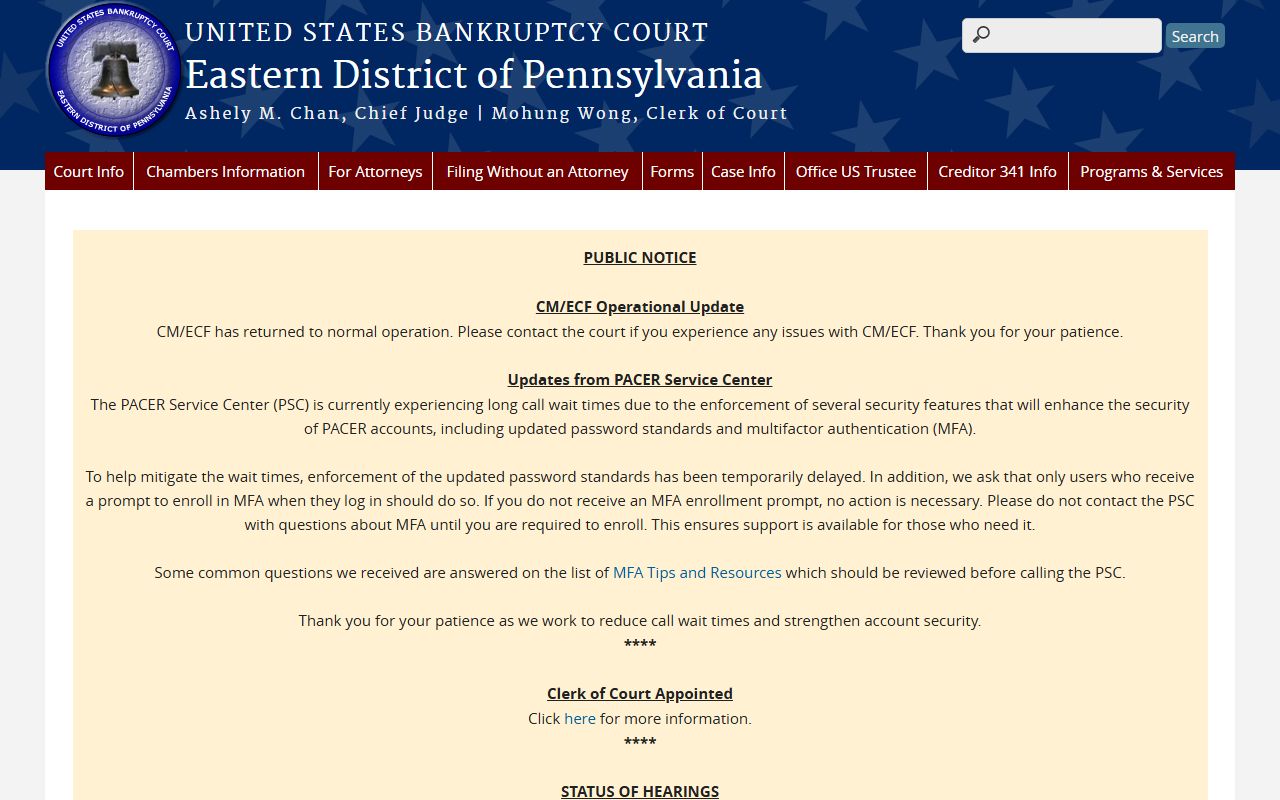
The Eastern District of Pennsylvania Bankruptcy Court covers Philadelphia and nine surrounding counties: Berks, Bucks, Chester, Delaware, Lancaster, Lehigh, Montgomery, Northampton, and Schuylkill. The court has three offices. The main Philadelphia office is at 601 Market Street in the James A. Byrne U.S. Courthouse, phone (215) 408-2800. The Reading office sits at 201 Penn Street, Suite 103, phone (610) 208-5040. The Allentown office is at 504 W. Hamilton Street. Office hours are Monday through Friday, 8:30 AM to 5:00 PM.
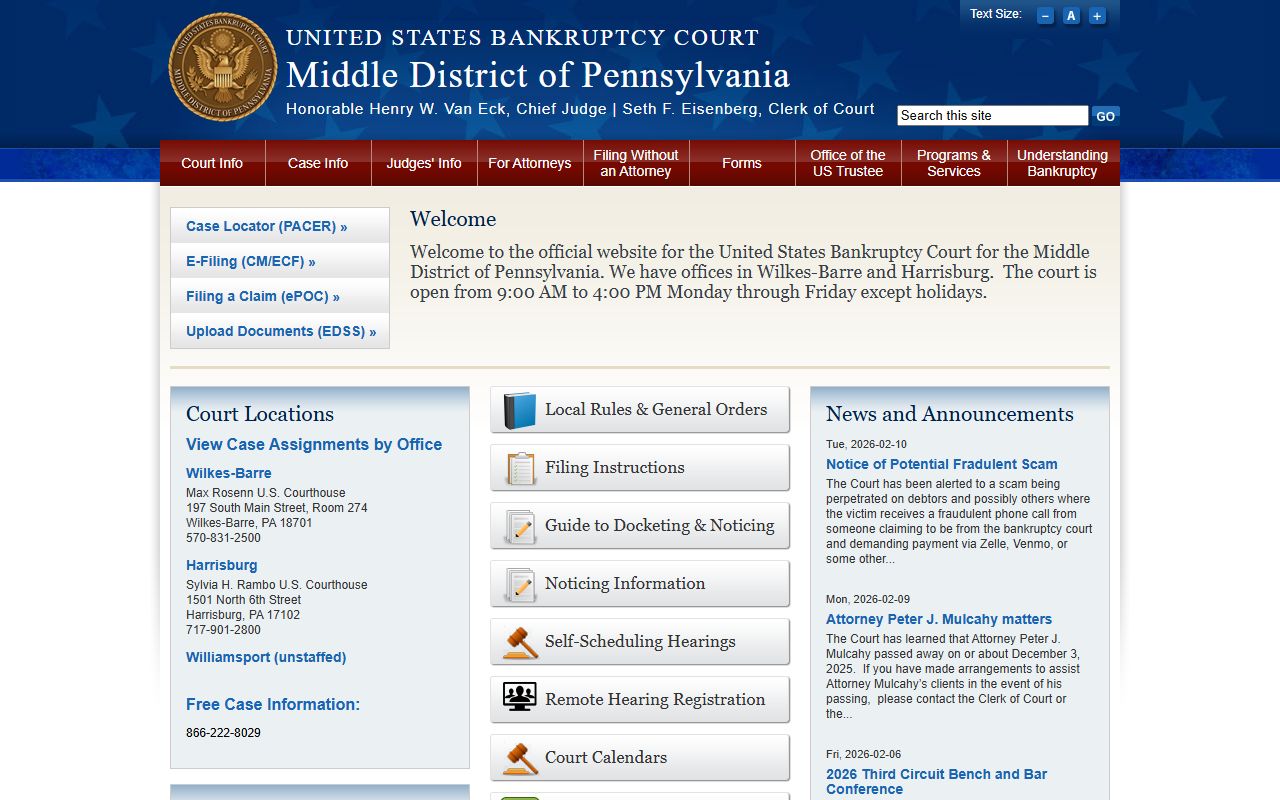
The Middle District of Pennsylvania Bankruptcy Court covers 31 counties that stretch from the New York border down to the Maryland border. This includes Adams, Bradford, Cameron, Carbon, Centre, Columbia, Cumberland, Dauphin, Franklin, Fulton, Huntingdon, Juniata, Lackawanna, Lebanon, Luzerne, Lycoming, Mifflin, Monroe, Montour, Northumberland, Perry, Pike, Potter, Snyder, Sullivan, Susquehanna, Tioga, Union, Wayne, Wyoming, and York counties. The Harrisburg office is at 2400 Old Turnpike Road, Suite 101, phone (717) 901-2800. The Wilkes-Barre office is at the Max Rosenn Memorial U.S. Courthouse, 197 S. Main Street, phone (570) 207-5600. Both offices are open Monday through Friday, 9:00 AM to 4:00 PM.
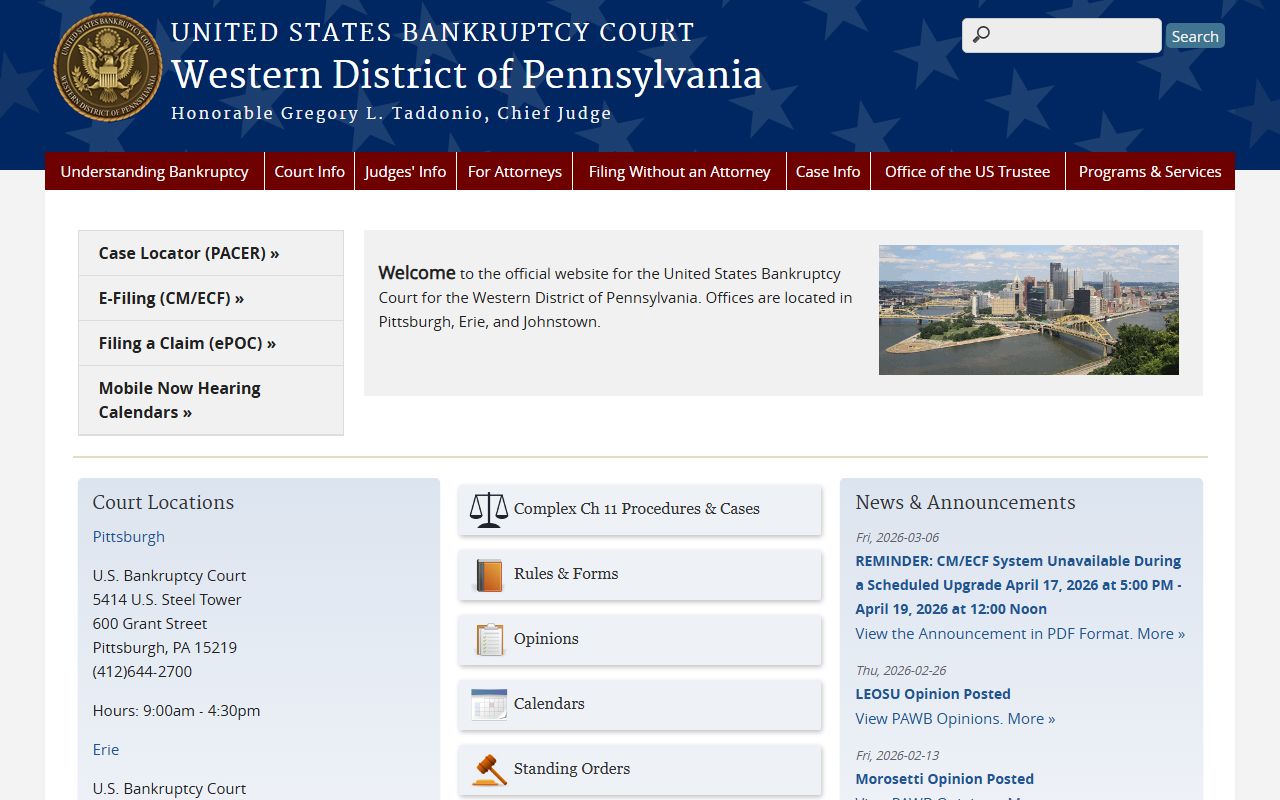
The Western District of Pennsylvania Bankruptcy Court serves 25 counties in western Pennsylvania including Allegheny, Armstrong, Beaver, Bedford, Blair, Butler, Cambria, Clarion, Clearfield, Crawford, Elk, Erie, Fayette, Forest, Greene, Indiana, Jefferson, Lawrence, McKean, Mercer, Somerset, Venango, Warren, Washington, and Westmoreland. The Pittsburgh office is at 600 Grant Street in the U.S. Steel Tower, phone (412) 644-2700. The Erie office is at 17 South Park Row, Room B160, phone (814) 464-9740. The Johnstown office is at 319 Washington Street, phone (814) 533-4246. Pittsburgh and Erie offices are open 9:00 AM to 4:30 PM, Monday through Friday.
The image below shows the PACER portal, which provides electronic access to case records from all three Pennsylvania bankruptcy districts and federal courts nationwide.
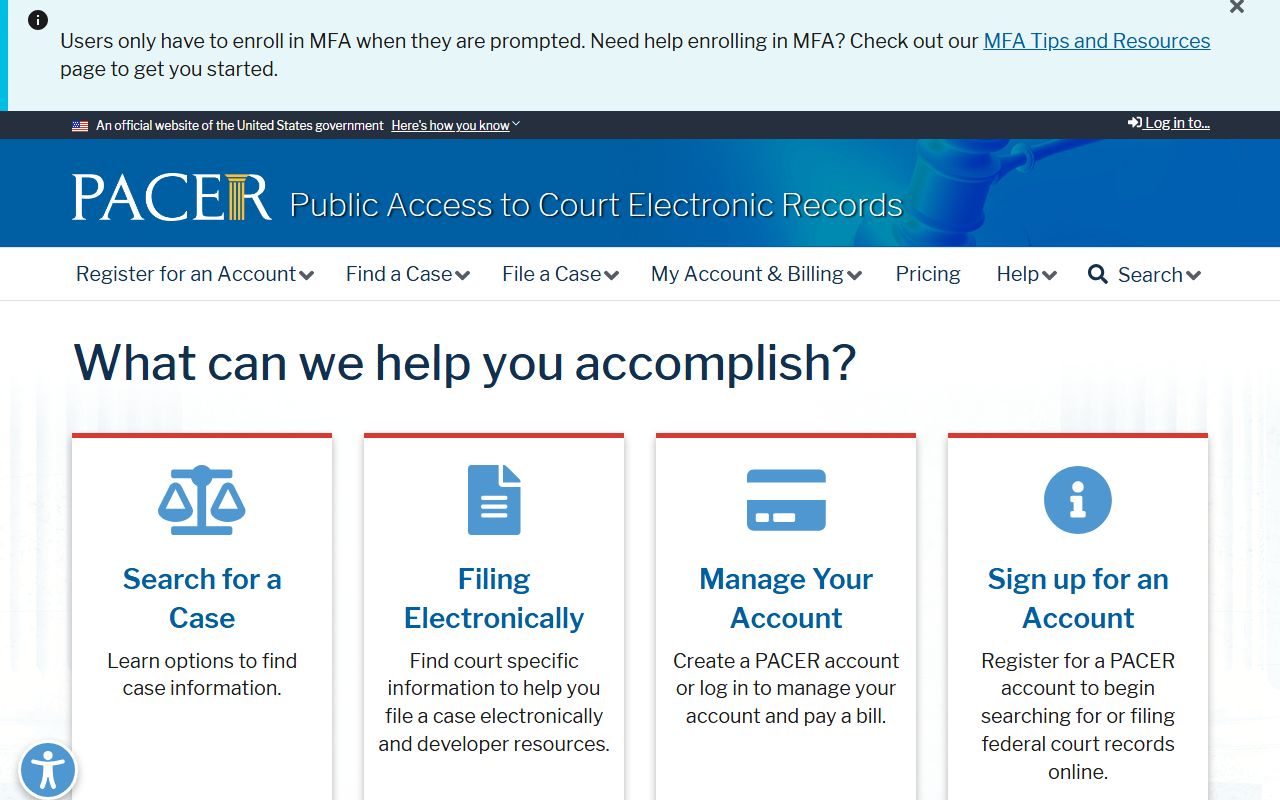
PACER is the primary online tool for searching Pennsylvania bankruptcy case records. A free account gives you access to case dockets, filed documents, and party information across all three PA districts.
How to Search Pennsylvania Bankruptcy Records
There are several ways to search Pennsylvania bankruptcy records. The method you choose depends on what information you have and how much detail you need. Free tools work well for basic lookups. Paid tools like PACER give you full document access.
PACER (Public Access to Court Electronic Records) is the main federal system for viewing bankruptcy case records. Register for free at pacer.uscourts.gov. Once logged in, you can search by party name, case number, or date range. You can view docket sheets, filed petitions, schedules, and other case documents. The fee is $0.10 per page, with a $3.00 cap per document. If your total charges stay under $30 in a quarter, no fee is billed at all. This makes PACER a practical and low-cost tool for most people searching Pennsylvania bankruptcy filings.
The Voice Case Information System (VCIS) offers free telephone access to basic case information 24 hours a day, seven days a week. Call toll-free 1-866-222-8029. For the Eastern District, press extension 713. For the Middle District, press extension 48. For the Western District, press extension 78. VCIS gives you the debtor name, chapter filed, filing date, trustee assigned, 341 meeting date, discharge date, and case status. No account is needed and there is no charge to use this service.
The Pennsylvania Unified Judicial System (UJS) Portal is a free state court database. It covers Pennsylvania appellate courts, Courts of Common Pleas, and Magisterial District Courts. Federal bankruptcy records are not stored here, but the portal is useful for finding related civil judgments, liens, or state court matters that may connect to a bankruptcy case. Search by name, docket number, or case type without creating an account.
Each Pennsylvania bankruptcy court also maintains public access terminals at its courthouse. These terminals let you search the court's case database at no charge. You can walk in during business hours and look up Pennsylvania bankruptcy cases for free at any of the nine clerk's office locations across the state.
Note: Public access terminals at each courthouse are free to use and do not require a PACER account. Bring the debtor's full name or case number to speed up your search.
PACER Access for Pennsylvania Bankruptcy Cases
PACER is the federal system that gives online access to records from all Pennsylvania bankruptcy courts. Registration is free at pacer.gov. You can choose to provide a credit card for same-day access or register without one and receive your login by mail within about a week. There is no fee to create an account.
Once registered, you can search any of the three Pennsylvania districts directly. Go to the Eastern District at paeb.uscourts.gov, the Middle District at pamb.uscourts.gov, or the Western District at pawb.uscourts.gov. Each court's PACER system lets you search by debtor name, business name, case number, or date range. Results show case status, chapter, trustee, attorneys, and links to all filed documents. You pay only for what you view. Court opinions and some public documents are free. Attorneys who need to file electronically must also link a CM/ECF account to their PACER login under the NextGen system. This allows electronic filing and gives access to restricted case documents.
The PACER Case Locator is a nationwide search tool that checks all federal courts at once. This is useful if you are not sure which Pennsylvania district a case was filed in. The database updates nightly. You can save searches and set up alerts for specific cases or parties. Fees are the same as standard PACER access at $0.10 per page, subject to the same $30 quarterly waiver.
For help with your PACER account, contact the PACER Service Center at (800) 676-6856, Monday through Friday, 7 AM to 6 PM Central Time. Email support is at pacer@psc.uscourts.gov. They can help with registration, billing questions, and account access issues.
Types of Pennsylvania Bankruptcy Filings
Federal bankruptcy law provides several options. The chapter you file under determines what records are created, what the process looks like, and how debts are handled.
Chapter 7 is the most common type in Pennsylvania. It is a liquidation proceeding. A trustee reviews your assets, sells any non-exempt property, and distributes the proceeds to creditors. Most unsecured debts are then erased. The filing fee is $338. A typical Chapter 7 case in Pennsylvania closes in about four months from filing. At that point, the court issues a discharge order under 11 U.S.C. § 524, which voids any prior judgment on discharged debts and bars creditors from collecting them going forward. Certain debts cannot be discharged. Under 11 U.S.C. § 523, exceptions include most student loans, recent income taxes, debts obtained by fraud, domestic support obligations, and a few other categories.
Chapter 13 allows individuals with regular income to keep their property and repay debts over a three to five year plan. The filing fee is $313. A confirmed plan must meet the requirements of 11 U.S.C. § 1325, including good faith and compliance with applicable law. Chapter 13 works well for Pennsylvania filers who have a home they want to protect or who have fallen behind on mortgage payments and need time to catch up. The trustee collects monthly plan payments and distributes them to creditors according to the confirmed plan. Completing the plan and receiving a discharge takes three to five years.
Chapter 11 is primarily used by businesses but is also available to individuals with high debt levels. It allows the debtor to reorganize while staying in operation. Chapter 12 is for family farmers and family fishermen with regular annual income. Both chapter types produce detailed court records including proposed plans, creditor objections, and confirmation orders. All bankruptcy filings in Pennsylvania are part of the public record and searchable through PACER.
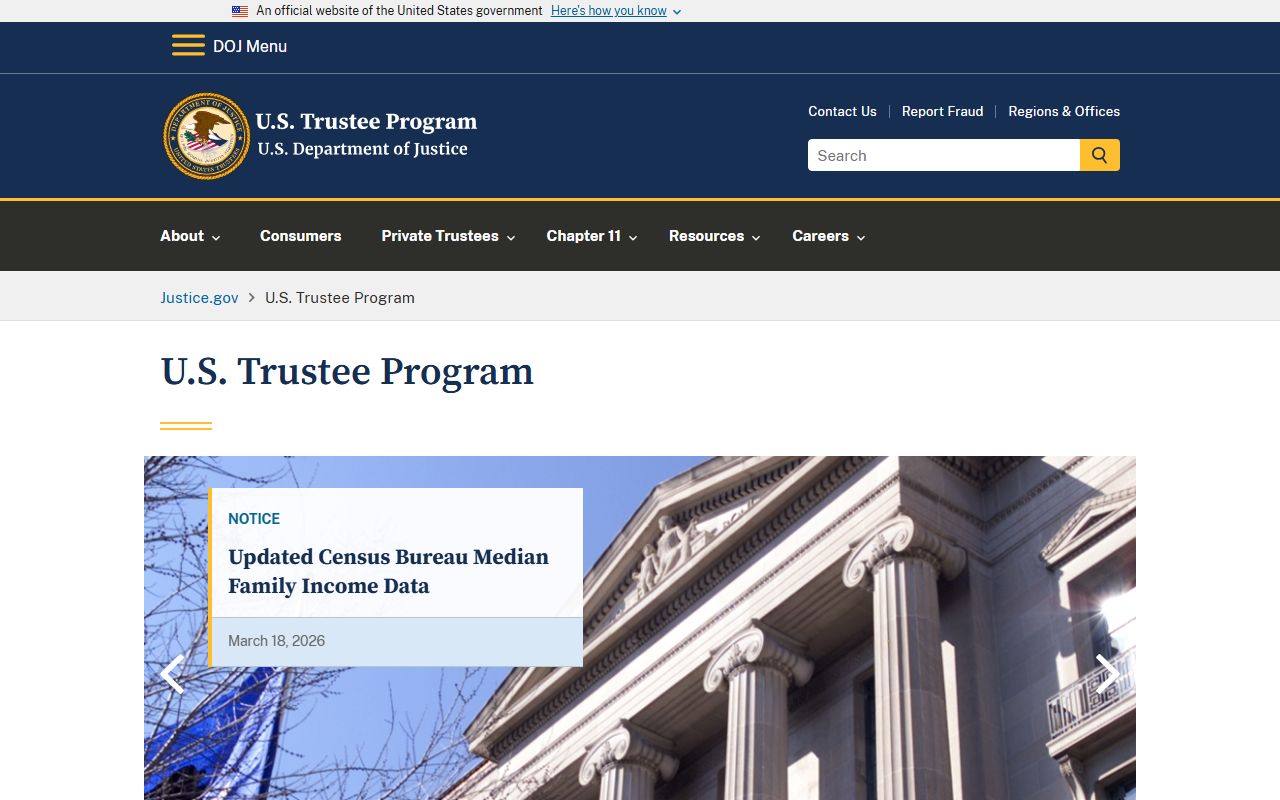
The U.S. Trustee Program oversees the administration of bankruptcy cases across all three Pennsylvania districts. The Eastern District regional office is at 633 Chestnut Street, Suite 1880, Philadelphia, PA 19106. The Program supervises trustees, reviews petitions for potential abuse, and maintains approved lists of credit counseling and debtor education providers under 11 U.S.C. § 111.
Pennsylvania Bankruptcy Exemptions Explained
Exemptions determine what property a debtor can keep when filing bankruptcy in Pennsylvania. Pennsylvania debtors may choose between Pennsylvania state exemptions and federal exemptions. You cannot mix the two sets. You must pick one system and apply it to all your property. Most Pennsylvania bankruptcy attorneys recommend using federal exemptions because they offer far stronger protection for common assets like homes and vehicles.
Pennsylvania state law provides very limited exemptions under 42 Pa.C.S. §§ 8123-8127. The state wildcard exemption is just $300 of any property under 42 Pa.C.S. § 8123. Pennsylvania has no homestead exemption under state law. There is no vehicle exemption under state law either. State law does protect certain insurance benefits, workers' compensation, unemployment compensation, and veterans' benefits. Wearing apparel, Bibles, school books, and military uniforms also receive protection. For most filers, these protections are simply not enough.
Federal exemptions under 11 U.S.C. § 522(d) are far more useful for Pennsylvania filers. The federal homestead exemption protects up to $27,900 in equity in your principal residence under 11 U.S.C. § 522(d)(1). The federal vehicle exemption covers up to $4,450 in one motor vehicle under 11 U.S.C. § 522(d)(2). The federal wildcard provides $1,475 plus any unused portion of the homestead exemption up to $13,950 extra under 11 U.S.C. § 522(d)(5). Household goods are protected up to $700 per item with a $14,875 total cap. Jewelry is covered up to $1,875. Tools of the trade are protected up to $2,800. Retirement accounts such as IRAs and Roth IRAs are exempt up to $1,512,350 per person under 11 U.S.C. § 522(b)(3)(C).
Note: Because Pennsylvania offers no homestead or vehicle protection under state law, the federal exemption system almost always provides more protection for Pennsylvania filers who own a home or a car.
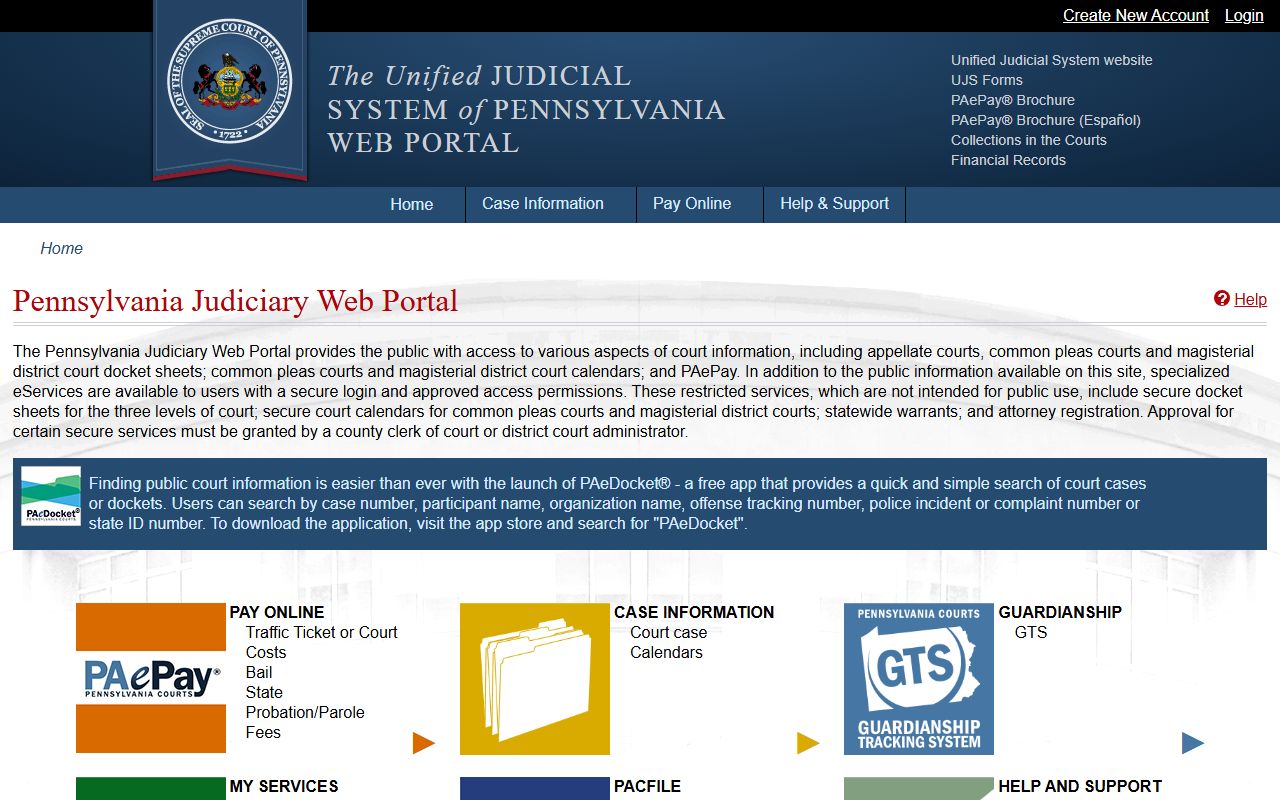
The Pennsylvania UJS Portal at ujsportal.pacourts.us can help you find state court judgments that may affect your bankruptcy case. Judgment liens on real property must be disclosed on your bankruptcy schedules and may be avoidable depending on your exemptions and equity in the property.
Pennsylvania Bankruptcy Filing Process
Filing for bankruptcy in Pennsylvania follows a defined sequence of steps. Each step generates records that become part of the public court file.
Before you can file, you must complete credit counseling from an agency approved by the U.S. Trustee Program under 11 U.S.C. § 111. This must happen within 180 days before you file your petition. The agency issues a certificate that you file with the court along with your petition. Without this certificate, the clerk will note the deficiency and your case may be dismissed if it is not resolved quickly. Approved agencies for Pennsylvania are listed on the Department of Justice website at justice.gov/ust.
Next, you prepare and file your bankruptcy petition with the correct federal district court. The petition includes schedules listing all assets, liabilities, income, expenses, contracts, and co-debtors. You also file a Statement of Financial Affairs disclosing recent transactions and financial history. The filing fee is $338 for Chapter 7 or $313 for Chapter 13. When the petition is filed, an automatic stay goes into effect immediately under 11 U.S.C. § 362. This stops most collection actions, lawsuits, wage garnishments, and creditor calls right away. The stay continues until the case is resolved or the court lifts it on motion from a creditor.
Between 21 and 40 days after filing, you must attend a Section 341 meeting of creditors under 11 U.S.C. § 341. You appear under oath and the trustee asks questions about your petition and finances. Creditors may also ask questions at this meeting, though they rarely attend in typical consumer cases. In the Western District, 341 meetings for cases filed on or after February 1, 2024 are held by Zoom. Check the court website for current hearing procedures in the Eastern and Middle Districts, as these can change.
After the 341 meeting, you must complete a debtor education course before your discharge can be entered. The certificate from this course must be filed with the court. In Chapter 7, the discharge typically comes about 60 days after the 341 meeting if no objections are filed, putting the total timeline at roughly four months from the filing date. The discharge order under 11 U.S.C. § 524 permanently prohibits creditors from collecting discharged debts and voids any prior judgments on those debts.
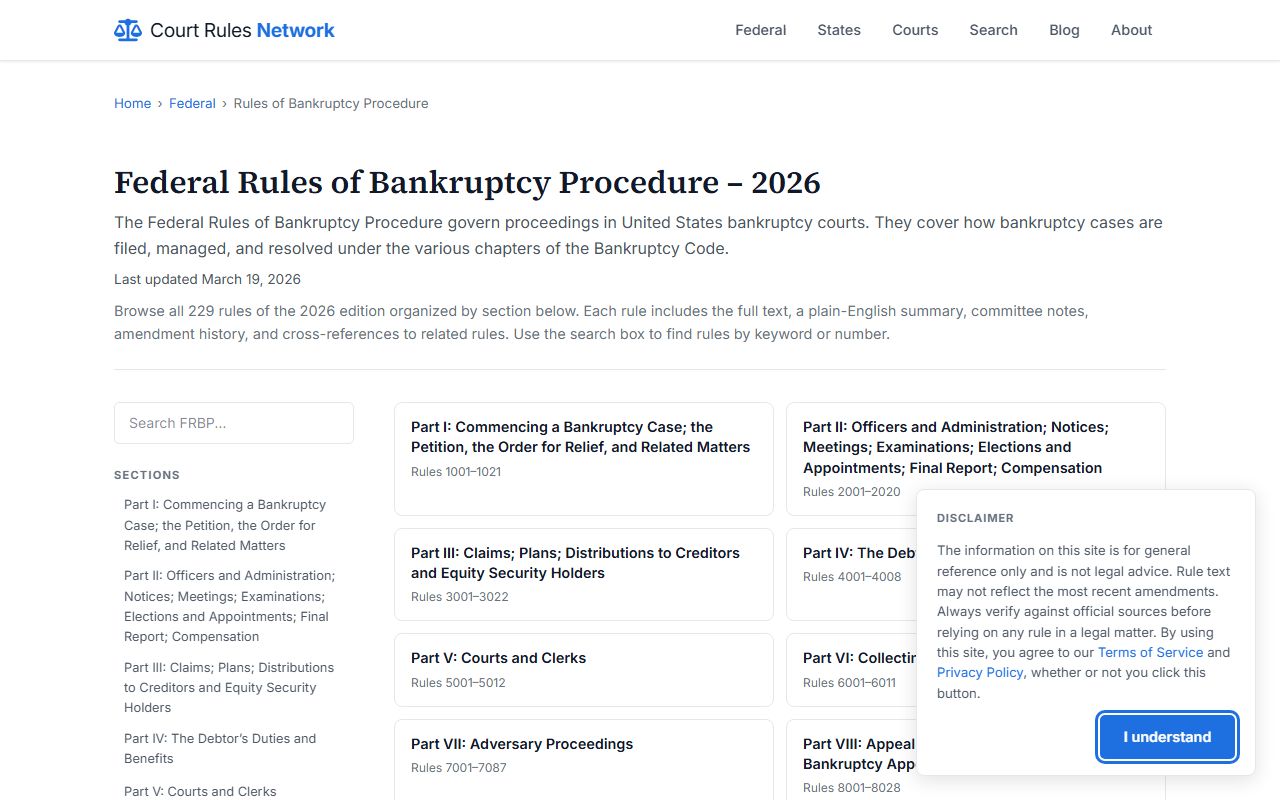
The Federal Rules of Bankruptcy Procedure govern how cases are handled in all three Pennsylvania districts. Rule 9037 requires that Social Security numbers, tax ID numbers, and birth dates in filed documents show only the last four digits. This protects personal information in the public record while keeping the rest of the case file accessible.
Historical Pennsylvania Bankruptcy Court Records
Older Pennsylvania bankruptcy records are stored in two places depending on their age and retention status. Cases still managed by the courts can be found through PACER, though very old cases may not be fully digitized. For cases that have been transferred out of the active court system, the National Archives holds many permanent records.
The National Archives and Records Administration (NARA) receives federal court records, including bankruptcy case files, once they are selected for permanent retention. Cases closed before roughly 1999 are most likely to have been transferred to NARA. The relevant NARA facility for Pennsylvania federal court records is the National Archives at Philadelphia or the National Archives at New York City. NARA maintains an online catalog at catalog.archives.gov where you can search descriptions of records held by the archives. Not all records have been fully digitized, so in-person visits or reproduction requests may be needed for older case files.
Records held at a Federal Records Center rather than NARA itself carry a retrieval fee of $64 to pull a file for viewing. Some records from the 1970s and 1980s are stored this way. Call the specific NARA facility before visiting to confirm what records they hold and how to access them.
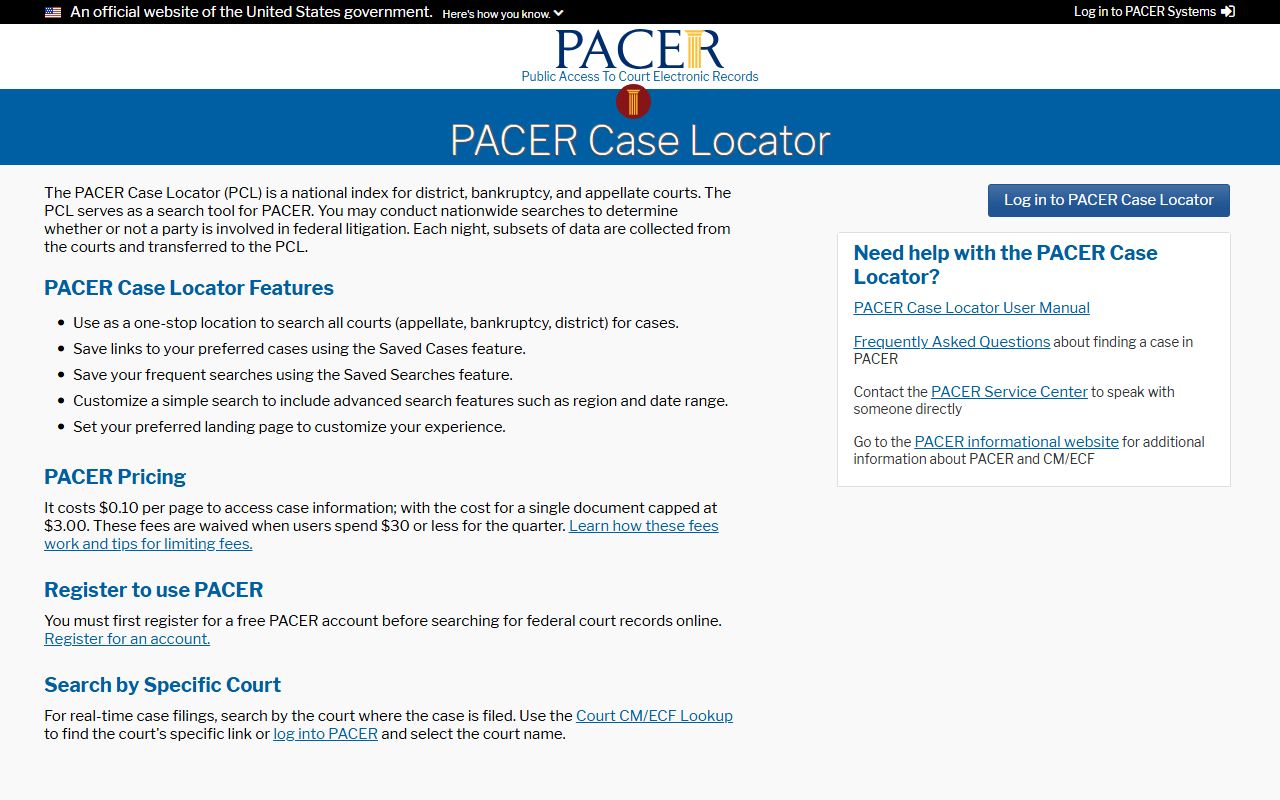
For cases from the 1990s onward, the PACER Case Locator at pcl.uscourts.gov is the best starting point. Even older digitized records are indexed there. The database updates nightly and covers all three Pennsylvania bankruptcy districts in a single nationwide search.
If a Pennsylvania bankruptcy case was appealed, records from that appeal are held by the U.S. Court of Appeals for the Third Circuit, located at 601 Market Street in Philadelphia. The Third Circuit covers bankruptcy appeals from all three Pennsylvania districts. Appellate records are also searchable through PACER using the same account and fee structure.
NARA is the best resource for very old Pennsylvania bankruptcy records that predate the digital era. Contact the NARA Philadelphia facility directly to ask about specific cases, file dates, and how to request copies. Some records can be viewed in person at NARA research rooms at no charge, while others require reproduction requests with applicable fees.
Note: For bankruptcy cases filed before 1980, records may be fragmented or partially missing due to earlier retention policies that did not require permanent preservation of all case files.
Legal Help for Pennsylvania Bankruptcy Filers
Navigating bankruptcy records and the filing process is easier with proper guidance. Several organizations in Pennsylvania provide free or low-cost legal help for people who qualify based on income.
The Pennsylvania Legal Aid Network is a statewide group of independent legal aid programs that help low-income residents with civil legal matters including bankruptcy. Services are generally available to individuals and families with incomes at or below 125% of the federal poverty guidelines, and some programs serve clients up to 200% depending on funding and case type. Major regional providers include Philadelphia Legal Assistance and Community Legal Services in Philadelphia, North Penn Legal Services in northeastern Pennsylvania, MidPenn Legal Services in the central region, Neighborhood Legal Services Association in western Pennsylvania, and Southwestern Pennsylvania Legal Services. Legal aid attorneys can advise on whether bankruptcy is appropriate, help prepare forms, and provide representation in court for eligible clients. Many programs also run telephone hotlines and brief-advice clinics for people who do not qualify for full representation.
The Pennsylvania Bar Association runs a lawyer referral service at (800) 692-7375. They can connect you with a bankruptcy attorney who handles cases in the relevant federal district. Many attorneys offer a free or low-cost initial consultation for bankruptcy matters.
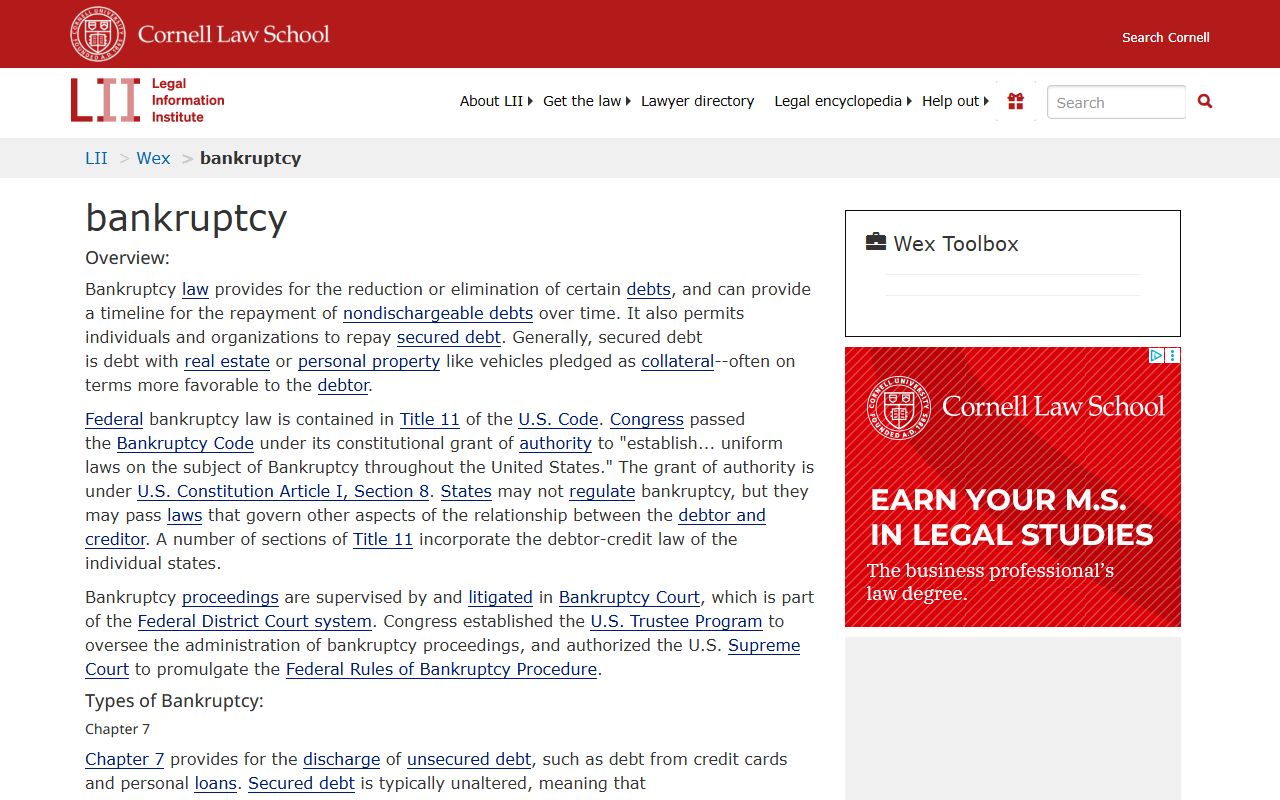
Each Pennsylvania bankruptcy court also has resources for people who represent themselves. The Middle District offers the Electronic Document Submission System (EDSS) so pro se filers can submit documents electronically without a CM/ECF account. All three districts post their local rules and official forms online. The Cornell Law School Legal Information Institute provides plain-English explanations of the Bankruptcy Code, the Federal Rules of Bankruptcy Procedure, and key statutes. It is a solid free starting point for anyone who wants to understand the law before consulting an attorney in Pennsylvania.
Understanding your rights under the Bankruptcy Code and knowing where to find case records puts you in a much better position whether you are a debtor, creditor, researcher, or attorney working on Pennsylvania bankruptcy cases.
Note: Income limits for legal aid programs can change, and some programs accept clients above standard thresholds depending on case type. Contact the relevant legal aid office directly to ask about current eligibility before assuming you do not qualify.
Browse Pennsylvania Bankruptcy Records by County
Each of Pennsylvania's 67 counties falls under one of the three federal bankruptcy districts. Select a county below to find local bankruptcy court information and resources.
Bankruptcy Records in Major Pennsylvania Cities
Residents of Pennsylvania's major cities file bankruptcy cases at their local federal bankruptcy court. Select a city for specific court information and local resources.