
Berks County Bankruptcy Records and Case Dockets
Berks County bankruptcy records are filed through the Eastern District of Pennsylvania, with a local Reading office that serves county residents without requiring a trip to Philadelphia. Whether you are searching for an existing bankruptcy case, trying to understand what records are available to the public, or preparing to file, this guide covers the Eastern District court in Reading, how to use PACER to access Berks County bankruptcy case records, what exemptions apply, and where to find legal help in the Reading area.
Berks County Quick Facts
Berks County Bankruptcy Court in Reading
Berks County residents file bankruptcy cases with the Eastern District of Pennsylvania Bankruptcy Court at the Reading office located at 201 Penn Street, Suite 103, Reading, PA 19601. Phone: (610) 208-5040. Office hours are Monday through Friday, 9:00 a.m. to 4:00 p.m. Having a local filing office in Reading is a significant advantage for Berks County residents compared to those in many other Eastern District counties who must travel to Philadelphia.
Section 341 meetings for Berks County cases are typically held in Reading. These meetings are scheduled between 21 and 40 days after the petition is filed. You must attend and bring a photo ID and your Social Security card or other proof of your number. The trustee will review your financial information and ask questions under oath. Most consumer 341 meetings in Reading last only a few minutes if everything in the petition is in order.
Attorneys file Berks County cases electronically through the CM/ECF system. Self-represented filers can use the EDSS portal to submit documents online. The court also maintains public access terminals in Reading where you can search and view case records for free during business hours.
The image below is from the Eastern District court website, which provides Berks County filers with local rules, forms, judge-specific procedures, and contact information for the Reading office.
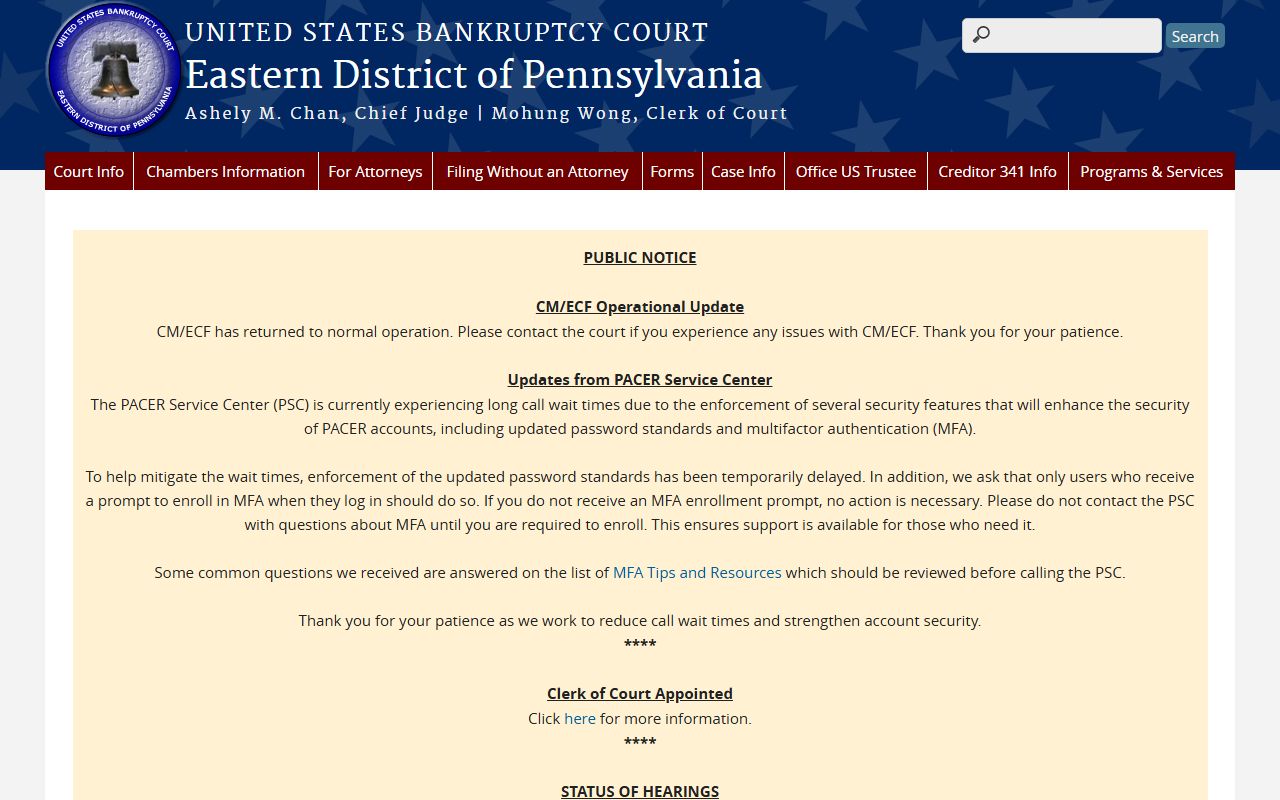
The Eastern District site also posts information about the Chapter 13 trustee requirements and local procedures that apply to all Berks County cases.
Searching Berks County Bankruptcy Case Records
The best way to search Berks County bankruptcy records online is through PACER. Register for free at pacer.gov. Once you have an account, search by party name, case number, or date range to find cases filed by Berks County residents. PACER gives you access to the full docket for each case, including every document that was filed, the judge assigned, and the current status.
The image below shows the PACER system, which stores all Berks County bankruptcy filings and lets you access them any time of day or night.
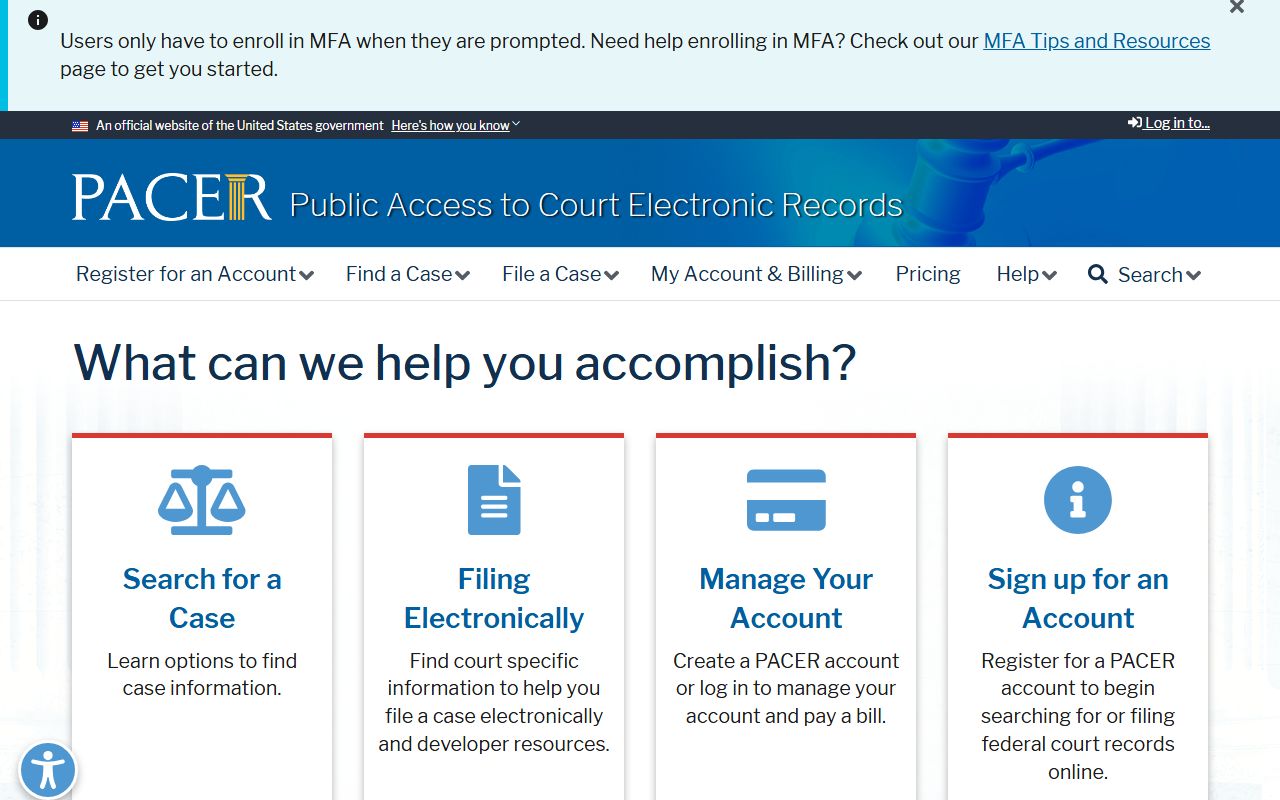
Viewing documents through PACER costs $0.10 per page with a $3.00 cap per document. If your quarterly charges stay under $30, they are waived automatically. Court opinions are always free. For most people looking up a few Berks County bankruptcy records, the cost is minimal or nothing.
You can also reach the Voice Case Information System for free at 1-866-222-8029, extension 713 for Eastern District cases. VCIS gives you case status, trustee name, and hearing dates over the phone without any login or PACER account.
The image below comes from the Pennsylvania Unified Judicial System Portal, which covers state court records across all 67 counties including Berks. State court records and federal bankruptcy records are separate systems, but both may be relevant when reviewing a complete financial picture.
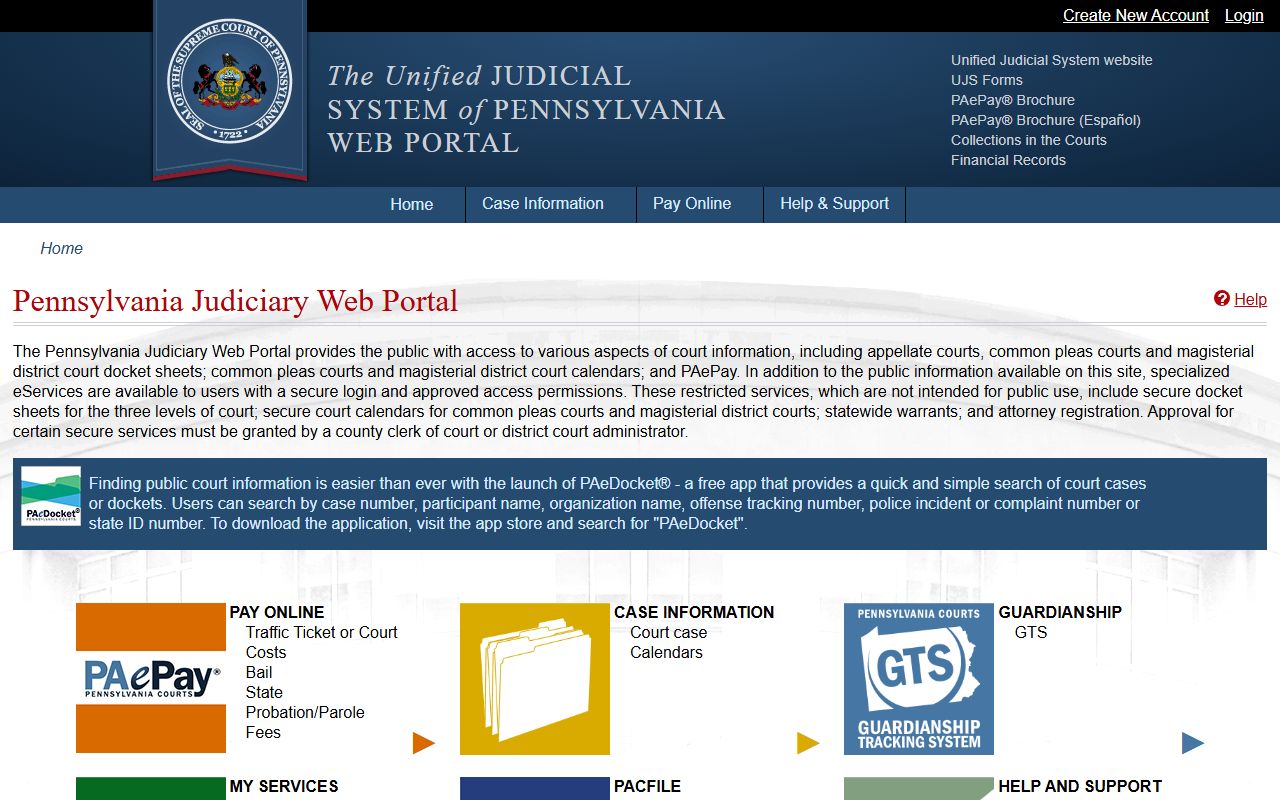
Note: The UJS Portal at ujsportal.pacourts.us covers Pennsylvania state court cases only. Use PACER for federal Berks County bankruptcy dockets.
Types of Bankruptcy in Berks County
Berks County sees substantial bankruptcy filing volume given its population of about 420,000 people. Individual consumer cases under Chapter 7 and Chapter 13 make up the majority of filings. Business reorganizations under Chapter 11 also appear given Reading's commercial activity.
Chapter 7 is the most commonly filed chapter for individuals in Berks County. It is a liquidation process in which a trustee reviews your assets and pays creditors from any unprotected property. Most consumer Chapter 7 cases are "no asset" cases where all property falls within exemptions and the discharge issues in about four months. Under 11 U.S.C. § 523, certain debts like recent taxes, most student loans, and domestic support cannot be discharged in Chapter 7.
Chapter 13 allows Berks County residents to keep their property while repaying debts over a three-to-five-year plan. It is widely used by homeowners facing foreclosure who want to catch up on missed mortgage payments over time. The court must confirm the plan, and creditors receive payments according to plan terms. Completing the plan results in a discharge of remaining eligible debts under 11 U.S.C. § 1328.
Chapter 11 reorganizations also occur in Berks County, particularly for businesses in the Reading area. These cases are more complex and costly than consumer filings but produce detailed public records of business finances, creditor claims, and reorganization plans.
Bankruptcy Exemptions for Berks County Residents
Pennsylvania filers choose between state and federal exemption sets. You cannot use both. Berks County residents should consider this choice carefully before filing, as it directly affects what property is protected.
Pennsylvania's state exemptions are quite limited for most people. The main general exemption under 42 Pa.C.S. § 8123 is a $300 wildcard for personal property. Pennsylvania has no homestead exemption and no vehicle exemption. Qualified retirement accounts and certain insurance proceeds have separate state law protections, but for general property Pennsylvania state exemptions leave most assets exposed.
The federal exemption set under 11 U.S.C. § 522(d) offers far more protection. The federal homestead exemption covers up to $27,900 in home equity. A vehicle exemption protects up to $4,450 in equity in one car. The federal wildcard of $1,475 plus up to $13,950 in unused homestead can protect additional personal property. For most Berks County homeowners and vehicle owners, the federal exemption set is the better choice.
The Bankruptcy Process in Berks County
Credit counseling is required before you can file. You must complete a course from a U.S. Trustee-approved provider within 180 days before your petition date. The course is available online and usually takes under two hours. You attach the certificate to your filed petition. Without it, the court will not accept your case.
When the petition is filed at the Reading office, the automatic stay under 11 U.S.C. § 362 takes effect at that exact moment. All collection activity against you stops. Lawsuits pause. Foreclosure halts. Wage garnishments end. This protection is immediate and applies to all creditors with claims against you in Berks County and elsewhere.
Chapter 7 filing in Berks County costs $338. Chapter 13 costs $313. Installment payments are available. A Chapter 7 fee waiver is possible if your income is below 150% of the poverty line.
The 341 meeting in Reading follows within 21 to 40 days. After that, a discharge in Chapter 7 typically comes in about four months if no objections are filed. A debtor financial management course must be completed before discharge issues in individual cases. Chapter 13 cases last three to five years, with discharge coming after all plan payments are made.
Legal Aid and Bankruptcy Help in Berks County
Several organizations provide legal help to Berks County residents facing financial difficulties. MidPenn Legal Services has a Reading office at 645 Cherry Street, Reading, PA 19602, phone (610) 375-4304. They provide free bankruptcy representation, foreclosure defense, and consumer protection services to clients whose income is at or below 125% of the federal poverty guidelines. Check the Pennsylvania Legal Aid network site for current intake hours and eligibility details.
The Berks County Bar Association at 544 Court Street, Reading, PA 19601, phone (610) 376-5250, coordinates lawyer referral services for those who need a private bankruptcy attorney. A referral can connect you with a lawyer who handles Eastern District cases and is familiar with the Reading office's procedures. Many bankruptcy attorneys in the Reading area offer a free first meeting.
The Pennsylvania Bar Association statewide referral line at (800) 692-7375 is another option for finding a bankruptcy attorney in Berks County. Duquesne and other law school clinics serve the western part of the state, but the Reading area has private practitioners who regularly handle the full range of consumer and business bankruptcy cases filed in Berks County.
Berks County Property and Civil Records Relevant to Bankruptcy
The Berks County Courthouse is at 633 Court Street, Reading, PA 19601. The Prothonotary at this address maintains civil court records for Berks County including judgments, mechanic's liens, and civil case files. Phone: (610) 478-6970. Hours are Monday through Friday, 8:00 a.m. to 5:00 p.m. Civil judgments against you in Berks County must be disclosed in your bankruptcy schedules. The Prothonotary can search by party name and provide certified copies. Online access is also available through the Pennsylvania UJS Portal.
The Recorder of Deeds is also at 633 Court Street and maintains all real estate records for Berks County. Phone: (610) 478-6360. If you own property in Berks County, gather your deed and any mortgage or lien documents before completing your bankruptcy petition. These records are needed to accurately complete the real property schedules. Certified copies are available for a fee. Online property records search is available through the county and court systems.
Cities in Berks County
Berks County includes the city of Reading as its county seat and largest municipality. All bankruptcy cases for Berks County residents are filed at the Eastern District Reading office at 201 Penn Street.
Nearby Counties
Berks County is surrounded by several other eastern Pennsylvania counties. Some neighbors fall within the Eastern District while others are in the Middle District. Confirm which district covers your home address before filing.