
Lehigh County Bankruptcy Records
Lehigh County bankruptcy records are filed with the U.S. Bankruptcy Court for the Eastern District of Pennsylvania. Lehigh County is the home of Allentown, the third-largest city in Pennsylvania, and has a population of about 380,000 residents in the Lehigh Valley region. One of the advantages for Lehigh County filers is that the Eastern District maintains an office right in Allentown at 504 West Hamilton Street, making court access more convenient than for many other counties. This page explains how to find Lehigh County bankruptcy records, what filing options exist, how exemptions protect your property, and where to get local legal help.
Lehigh County Quick Facts
Lehigh County Bankruptcy Court in Allentown
Lehigh County is served by the Eastern District of Pennsylvania Bankruptcy Court. The Allentown divisional office at 504 West Hamilton Street is located right in the county seat, which makes it one of the more convenient federal court locations in Pennsylvania. Lehigh County residents do not need to travel far to file documents or attend hearings. The Philadelphia headquarters is also available for matters assigned there.
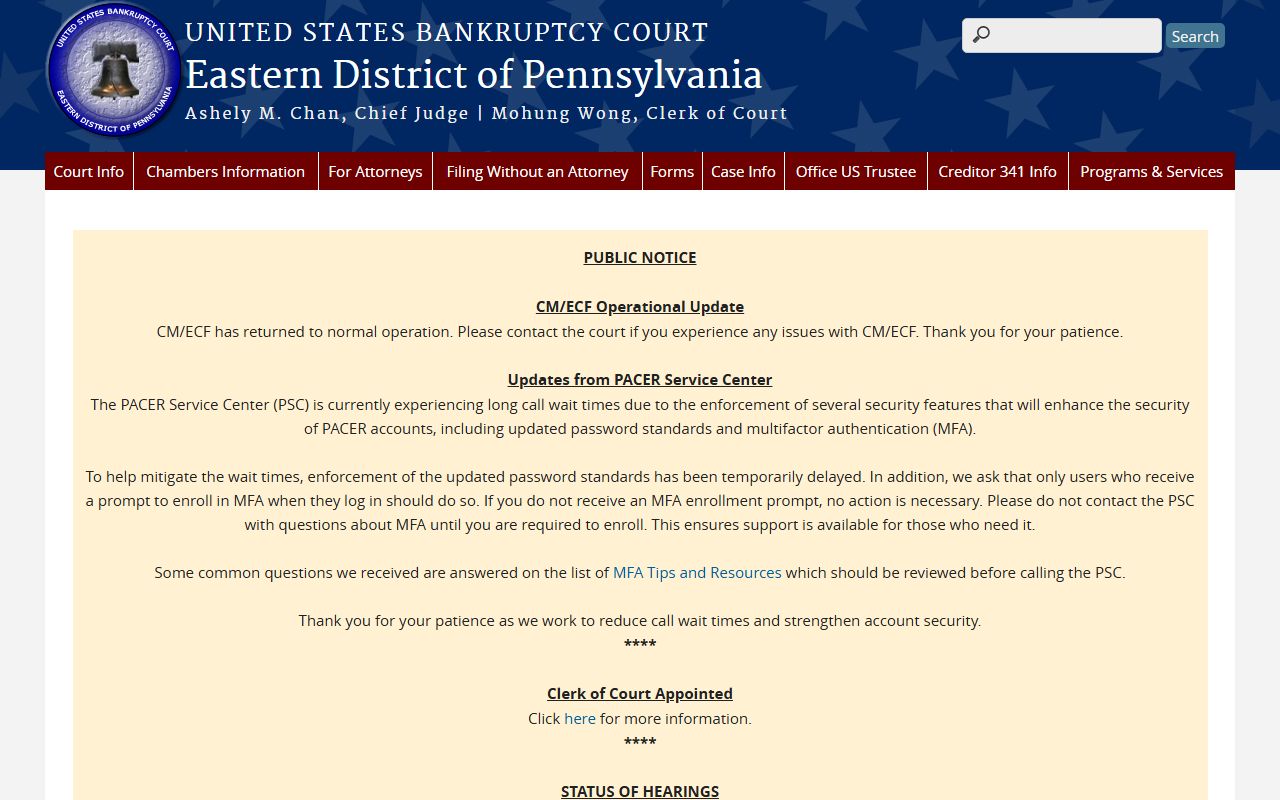
The court uses CM/ECF for attorney electronic filings. Multi-factor authentication is required to access the filing system. Pro se filers in Lehigh County can contact the clerk's office about alternative submission methods. Section 341 meetings for Lehigh County cases are typically held in the Allentown area, which means most residents attend meetings close to home. Confirm the exact meeting location on your case notice after filing.
| Allentown Office |
504 W. Hamilton Street Allentown, PA 18101 VCIS: 1-866-222-8029, Ext. 713 |
|---|---|
| Philadelphia Office |
James A. Byrne U.S. Courthouse 601 Market Street Philadelphia, PA 19106 Phone: (215) 408-2800 |
| Hours | Monday through Friday, 8:30 AM to 5:00 PM |
| Website | paeb.uscourts.gov |
Note: Lehigh County is part of the broader Lehigh Valley, one of the faster-growing regions of Pennsylvania. The local bankruptcy court sees cases from both individual residents and local businesses across many industries.
PACER Online Bankruptcy Records Search
PACER gives you full digital access to Lehigh County bankruptcy records. You can search from your computer or phone any time of day. Create a free account at pacer.gov before you begin. Once logged in, select the Eastern District of Pennsylvania and search by debtor name, case number, or other identifying details.
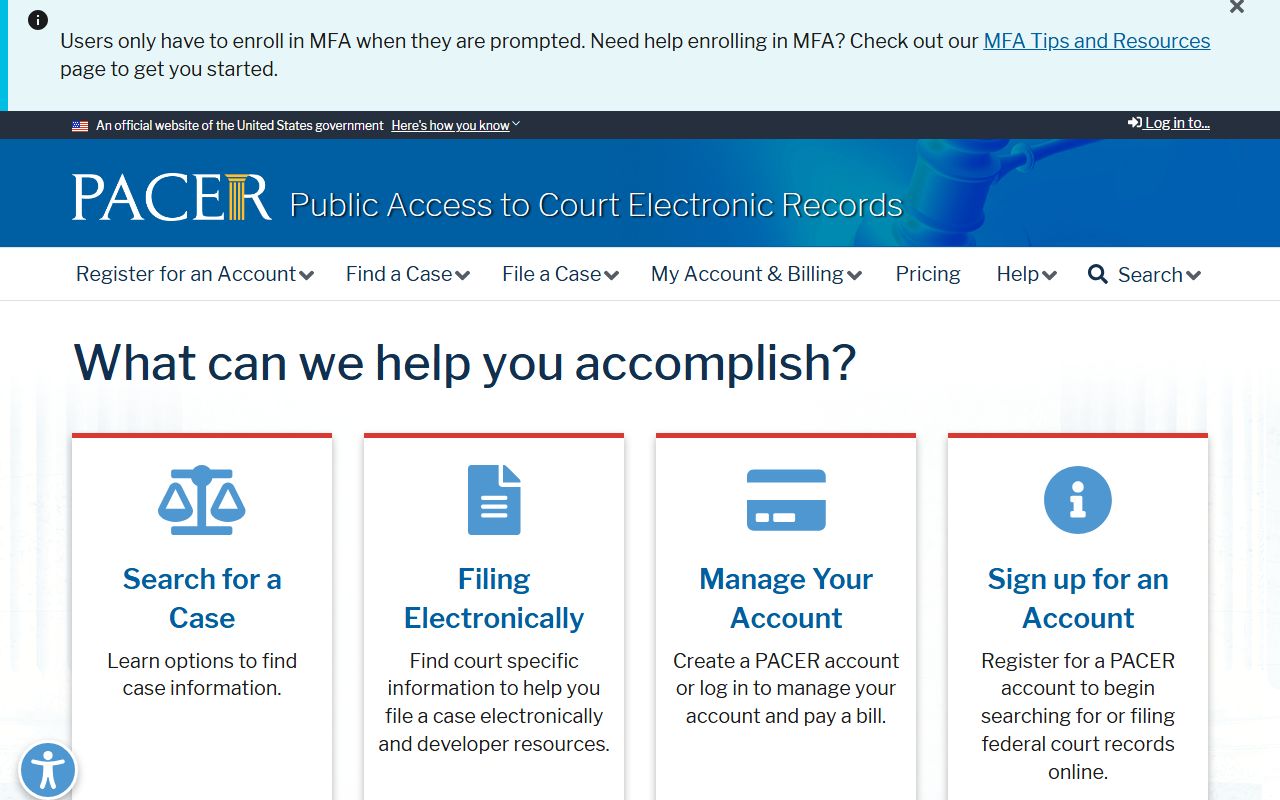
Charges are $0.10 per page. Single documents are capped at $3.00 no matter how long they are. Quarterly fees under $30 are waived entirely. Court opinions are always free. PACER shows the full case docket, all filed documents, assigned trustee, and case status for every Lehigh County bankruptcy case in the system. Most users who search a few cases at a time pay nothing at all.
The VCIS phone line at 1-866-222-8029, extension 713, provides free automated case lookups. The system reads back filing dates, case numbers, trustee assignments, and 341 meeting information. Full documents are not available by phone. Use it for quick status checks on Lehigh County cases when you do not want to log into PACER. Have the debtor name or case number ready before calling.
Lehigh County Prothonotary and Local Records
The Lehigh County Prothonotary keeps civil court records at the courthouse in Allentown. The office handles civil judgments, liens, and other state-level case records. These are separate from the federal bankruptcy records in PACER. Phone: (610) 782-3160. The courthouse is at 455 West Hamilton Street, Allentown, PA 18101. Hours are Monday through Friday, 8:00 AM to 5:00 PM.
The Recorder of Deeds handles real estate records at the same courthouse address. Phone: (610) 782-3161. If you own property in Lehigh County, deeds, mortgages, and recorded liens are on file there. You may need to pull certified copies of your deed and any recorded mortgages when preparing your bankruptcy schedules. Online property records are available through the county website.
Note: Judgments entered by the Lehigh County Prothonotary become liens on any real property you own in the county. List these in your bankruptcy schedules when you file. The Unified Judicial System portal at ujsportal.pacourts.us lets you search Lehigh County civil records online for free.
Types of Bankruptcy Cases in Lehigh County
Lehigh County has a large and diverse population. The Lehigh Valley is home to working families, a strong healthcare sector, logistics firms, and a growing retail industry. The types of bankruptcy cases filed in Lehigh County reflect this mix of individual and business filers.
Chapter 7 is the most common form of personal bankruptcy. It wipes out most unsecured debts within about four months. The filing fee is $338. A trustee reviews your assets. Most personal cases end with no assets being sold because exemptions cover everything the debtor owns. You must qualify through the means test, which compares your income to the Pennsylvania median for a household of your size. Lehigh Valley wages vary widely, so some filers require further means test analysis even if they feel they qualify.
Chapter 13 lets you keep your property and pay debts over three to five years under a court-approved plan. The filing fee is $313. It is popular among Lehigh County homeowners who want to stop foreclosure or catch up on arrears while keeping their homes. The Allentown housing market has seen growth in recent years, so home equity matters significantly to many local filers. At plan completion, remaining eligible debts are discharged.
Chapter 11 is used by businesses and by individuals whose debts exceed the Chapter 13 limit. Allentown and the surrounding Lehigh Valley have a number of small and mid-size businesses. Chapter 11 allows reorganization while keeping the business open and paying creditors over time. Subchapter V is a faster and lower-cost option for qualifying small businesses.
Exemptions for Lehigh County Bankruptcy Filers
When you file bankruptcy in Lehigh County, you choose between Pennsylvania state exemptions and the federal exemption system. The right choice depends on what you own and how much it is worth. You cannot mix both systems.
Pennsylvania state exemptions are very limited. The state offers no homestead exemption and no vehicle protection. The wildcard is only $300 under 42 Pa.C.S. § 8123. Wages paid within 30 days before filing are fully exempt. For Allentown-area homeowners with equity built up over years of rising property values, state exemptions provide almost no protection for that equity.
Federal exemptions under 11 U.S.C. § 522 are usually far better for Lehigh County filers. Home equity up to $27,900 is covered under § 522(d)(1). Vehicle equity is protected up to $4,450 under § 522(d)(2). The wildcard under § 522(d)(5) can be applied to any type of property. Unused homestead allowance can also be added to the wildcard, giving you added coverage for other assets. Most Lehigh County residents who own a home and car will protect both under the federal system. Consult a bankruptcy attorney before making this election to be sure.
Bankruptcy Filing Steps for Lehigh County Residents
Before filing in Lehigh County, complete a credit counseling course from an approved provider. Do this within 180 days before your filing date. The session runs about an hour and can be done by phone or online. Save the completion certificate.
Once you file your petition, the automatic stay under 11 U.S.C. § 362 takes effect. Creditors must stop all collection activity at once. This means collection calls, lawsuits, wage garnishments, and foreclosure proceedings all halt the day you file. This protection applies to all Lehigh County filers as of the filing date, not when creditors receive notice of the case.
Your 341 meeting of creditors is set 21 to 40 days later. You attend in Allentown and answer the trustee's questions under oath. The meeting is usually short. After it, Chapter 7 cases move toward discharge. Chapter 13 cases move to plan confirmation. The discharge under 11 U.S.C. § 524 releases you from personal liability on eligible debts. Debts listed in 11 U.S.C. § 523 are not discharged, including most student loans, recent taxes, and child support obligations. After discharge, Lehigh County creditors covered by it cannot pursue you personally for the money.
Note: You must complete a debtor education course after filing but before your discharge is entered. Approved providers offer online and phone options for Lehigh County residents.
Legal Resources for Lehigh County Bankruptcy Filers
Allentown and Lehigh County have several options for residents who need legal help with bankruptcy. Both free and paid services are available, depending on your income and needs.
Pennsylvania Legal Aid at palegalaid.net serves Lehigh County residents who meet income eligibility requirements. Free civil legal help is available for qualifying individuals, including bankruptcy counseling and court representation. Check the website to apply and confirm eligibility. The Lehigh County Bar Association at (610) 433-6204 provides a lawyer referral service for those who prefer to work with a private attorney. The Bar is located at 1101 South 9th Street in Allentown. Many member attorneys offer free initial consultations for bankruptcy cases in Lehigh County.
The Pennsylvania Bar Association statewide referral line at (800) 692-7375 can also connect you with a bankruptcy attorney licensed in the Eastern District of Pennsylvania. Getting legal advice before you file helps you choose the right chapter, pick the better exemption system, and avoid common errors that can delay or harm your case in Lehigh County.
Cities in Lehigh County
Allentown is the county seat and the largest city in Lehigh County and in the broader Lehigh Valley. All bankruptcy cases for Lehigh County residents are handled by the Eastern District court, with hearings often held at the Allentown office.
Nearby Counties
Lehigh County is surrounded by four Pennsylvania counties. All share the Eastern District of Pennsylvania for bankruptcy purposes and can use the Allentown courthouse for filings and hearings in many cases.