
Find Allegheny County Bankruptcy Filings
Allegheny County bankruptcy records are filed through the Western District of Pennsylvania, with the courthouse located right in Pittsburgh. As the most populous county in western Pennsylvania, Allegheny County generates a large volume of bankruptcy filings each year. Whether you need to look up a specific case, check the status of a filing, or understand the process before you file, this guide covers the key resources, court contacts, and steps for searching Allegheny County bankruptcy records.
Allegheny County Quick Facts
Allegheny County Bankruptcy Court
The Western District of Pennsylvania Bankruptcy Court sits in Pittsburgh at 5414 U.S. Steel Tower, 600 Grant Street, Pittsburgh, PA 15219. Phone: (412) 644-2700. Office hours are Monday through Friday, 9:00 a.m. to 4:30 p.m. Allegheny County residents file their cases here without having to travel out of the county, which is a significant convenience compared to many rural Pennsylvania counties.
The court has multiple judges handling Allegheny County bankruptcy cases. Each judge has specific procedures posted on the court website that attorneys and self-represented filers must follow. Hearing dates for most motions are selected by self-scheduling from the published calendar, and parties must provide at least 25 days' notice. Confirm the judge assigned to your case and review their specific requirements before submitting any motion.
Section 341 meetings are held in Pittsburgh for Allegheny County filers. These meetings are scheduled 21 to 40 days after the petition is filed. The trustee administering your case will ask questions under oath about your property, debts, and income. Most straightforward consumer cases wrap up in under 10 minutes. Creditors may attend but rarely do.
The image below is from the Western District court website, which lists local rules, judge procedures, forms, and fee schedules for all Allegheny County bankruptcy filings.
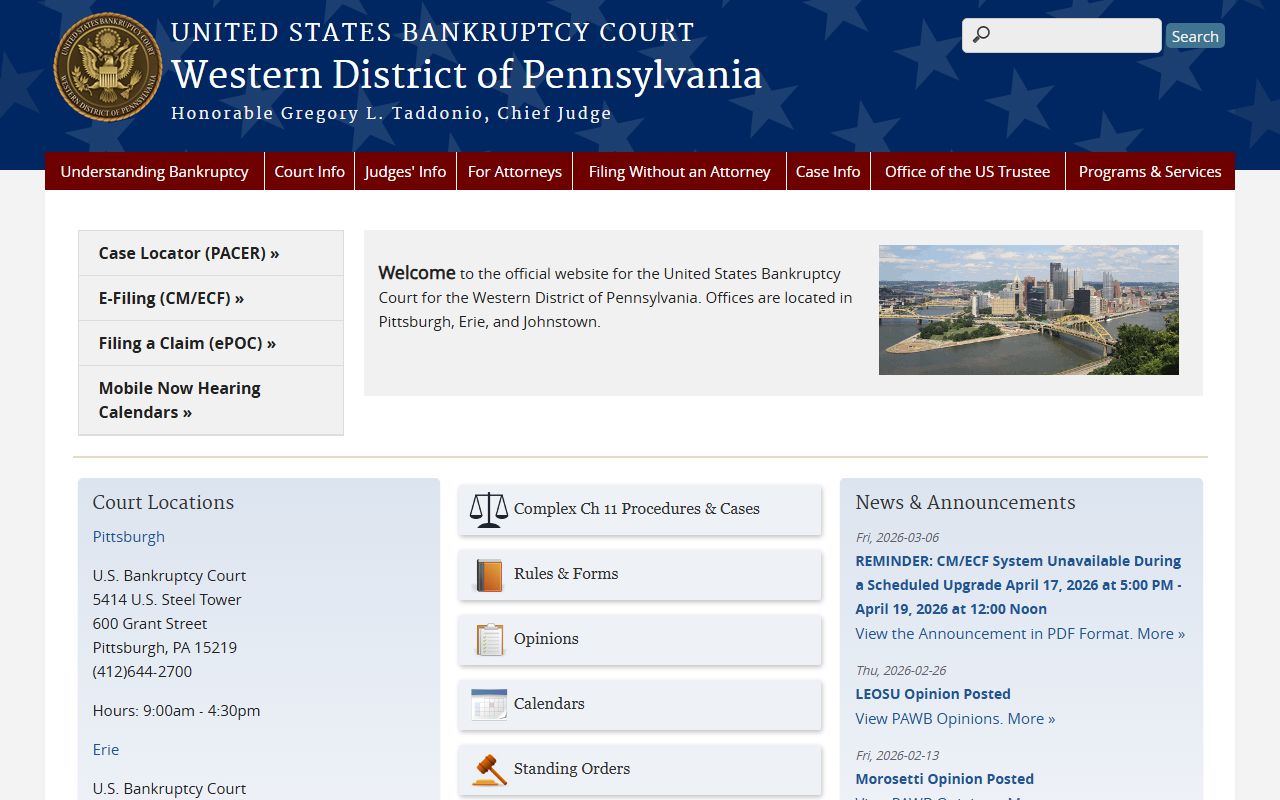
The site also includes a link to the CM/ECF login for attorneys filing Allegheny County cases and the EDSS portal for pro se filers.
Searching Allegheny County Bankruptcy Case Records
PACER is the primary tool for searching Allegheny County bankruptcy records online. You can register for free at pacer.gov and then search by party name, case number, or date range. The fee is $0.10 per page. Each document caps at $3.00. Quarterly charges under $30 are waived automatically. For most public record searches, the cost is minimal.
The image below shows the PACER system interface, which is where you access Allegheny County bankruptcy case dockets and filed documents around the clock.
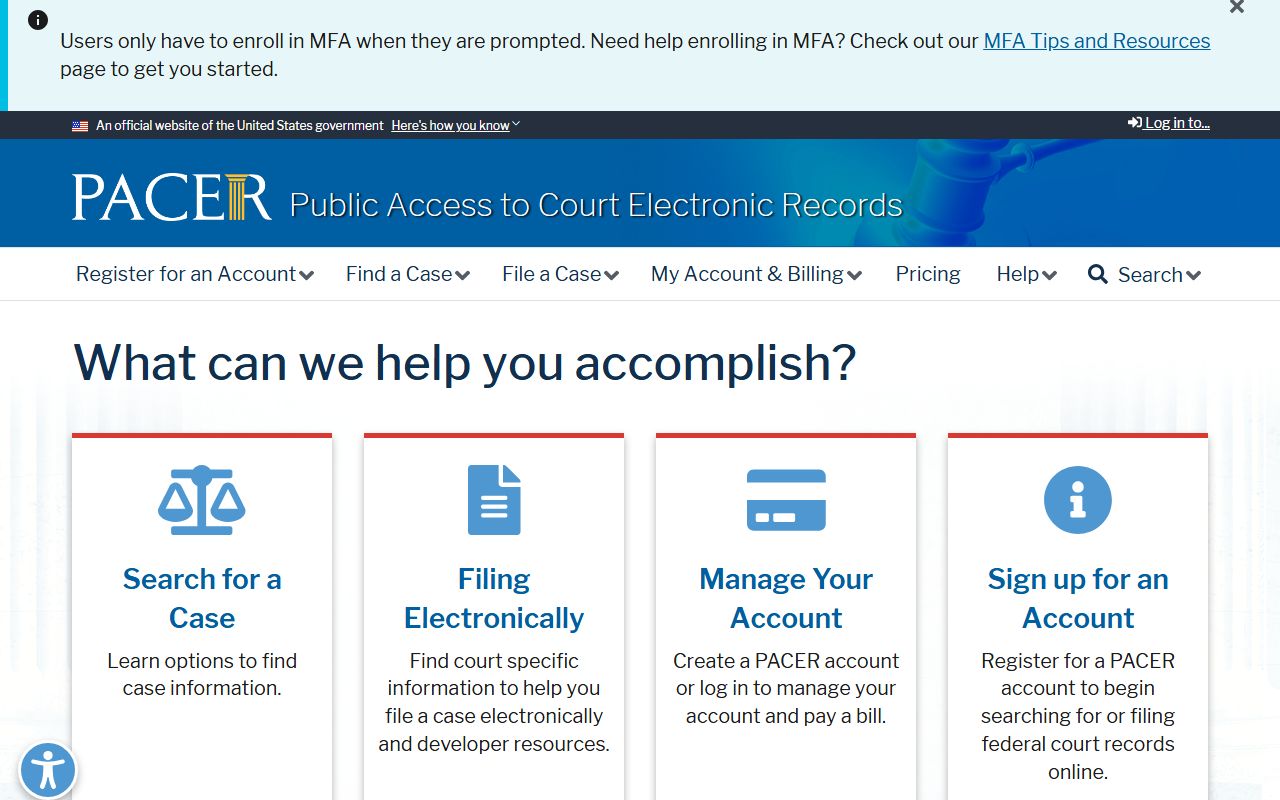
You can also call the Voice Case Information System toll-free at 1-866-222-8029, extension 78, for free basic case information by phone. This gives you the case status, trustee name, and next scheduled date without logging into any system.
Public access terminals are available at the Pittsburgh courthouse. You can search and view case records at these terminals during business hours without paying PACER viewing fees. Bring a photo ID when visiting the courthouse in person.
The image below is from the Allegheny County Courts website, which maintains state court records that may be relevant when preparing bankruptcy schedules requiring disclosure of pending state court litigation.
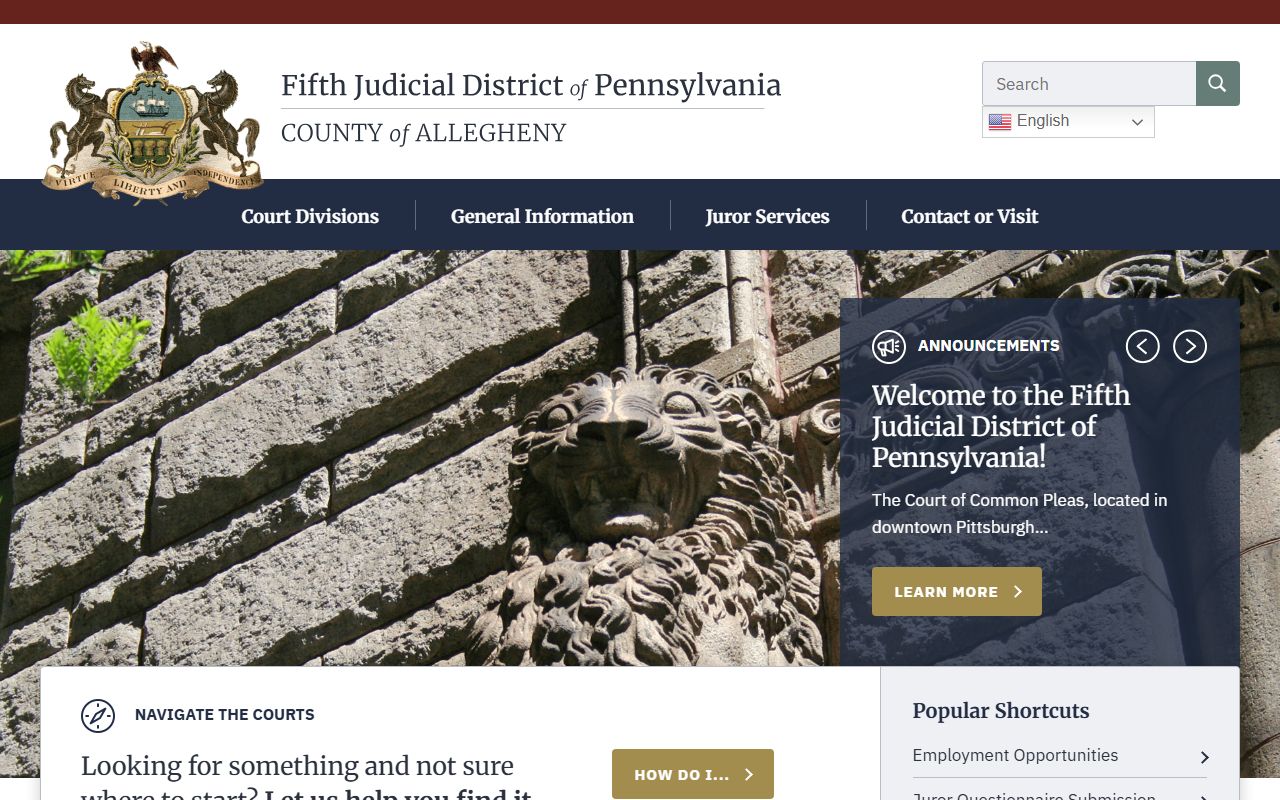
Note: State court records from the Allegheny County Court of Common Pleas are separate from federal bankruptcy records. Use PACER for bankruptcy dockets and the UJS Portal at ujsportal.pacourts.us for state court case information.
Types of Bankruptcy Filed in Allegheny County
Allegheny County sees a high volume of consumer bankruptcy filings due to its large population. Chapter 7 and Chapter 13 make up the vast majority of individual cases. Business filings under Chapter 11 also occur, particularly given Pittsburgh's commercial base.
Chapter 7 is the quickest path. Most consumer Chapter 7 cases in Allegheny County close in about four months. A trustee reviews your assets and pays creditors from any non-exempt property, but in most individual cases everything is protected by exemptions. Debts that cannot be discharged are defined in 11 U.S.C. § 523 and include most student loans, recent taxes, and domestic support obligations.
Chapter 13 is the choice for Allegheny County residents who want to keep property that would otherwise be liquidated, or who need to catch up on mortgage arrears to save a home. You propose a three-to-five year repayment plan. The plan must be confirmed by the court. After you complete all plan payments, remaining eligible debts are discharged.
Chapter 11 is available to businesses and high-debt individuals in Allegheny County. It allows a reorganization of finances while the debtor remains in control as a "debtor in possession." Chapter 11 cases are more complex and more expensive than consumer filings.
Pennsylvania Exemptions for Allegheny County Filers
Pennsylvania filers must elect either state or federal exemptions. You cannot combine both sets. The choice matters a great deal for Allegheny County homeowners and car owners.
Pennsylvania's state exemption under 42 Pa.C.S. § 8123 provides only a $300 wildcard for personal property. There is no state homestead exemption and no vehicle exemption in Pennsylvania state law. Pension and retirement funds held in qualified plans are exempt under state law, but the general property protection is very limited.
The federal exemption set under 11 U.S.C. § 522(d) protects up to $27,900 in home equity under the homestead exemption. For vehicles, the federal exemption protects up to $4,450 in equity. A federal wildcard of $1,475 plus unused homestead can add thousands more in coverage for personal property. For most Allegheny County residents who own a home or a car, choosing federal exemptions makes more sense.
The Bankruptcy Process in Allegheny County
The process starts before you file. Within 180 days before filing, you must complete an approved credit counseling course. This course can be done online or over the phone in most cases. You receive a certificate to file with your petition. The U.S. Trustee's office publishes the list of approved counseling providers for the Western District.
When you file your bankruptcy petition with the Western District court in Pittsburgh, the automatic stay under 11 U.S.C. § 362 takes effect immediately. Collections stop. Wage garnishments stop. Foreclosure proceedings pause. This happens automatically without a court order, the moment your petition is filed. Creditors who violate the stay risk sanctions from the court.
After the 341 meeting in Pittsburgh, Chapter 7 cases proceed to discharge in roughly four months if no issues arise. Discharge under 11 U.S.C. § 524 eliminates personal liability on dischargeable debts. In Chapter 13, the discharge comes after you complete your repayment plan, which can take up to five years.
Filing fees for Allegheny County cases are set by federal law. Chapter 7 currently costs $338 to file. Chapter 13 costs $313. The court may allow payment in installments for individuals who cannot pay all at once. A waiver of the filing fee is available for Chapter 7 filers whose income falls below 150% of the poverty line.
Legal Aid and Attorney Resources in Allegheny County
Neighborhood Legal Services Association provides free civil legal help to low-income Allegheny County residents. Their Pittsburgh office is at 928 Penn Avenue, Pittsburgh, PA 15222, and can be reached at (412) 255-6700. NLSA handles consumer bankruptcy cases, foreclosure defense, and consumer protection matters for clients who meet income guidelines, generally at or below 125% of the federal poverty guidelines. They also operate a telephone intake line and provide self-help materials for people who do not qualify for full representation.
The Allegheny County Bar Association runs a lawyer referral service at (412) 402-6680. If you need a private bankruptcy attorney in Pittsburgh or the surrounding Allegheny County area, the referral service can match you with someone who handles Chapter 7, Chapter 13, or business bankruptcy cases in the Western District. The Bar Association is located at 400 Koppers Building, 436 Seventh Avenue, Pittsburgh.
Duquesne University School of Law operates legal clinics that may assist low-income residents with consumer bankruptcy matters. Law students work under attorney supervision to provide services. The law school library is also open to the public and provides access to bankruptcy treatises and practice guides. Clinic availability varies by semester, so contact the law school directly for current offerings.
Allegheny County Records Related to Bankruptcy
The Allegheny County Department of Court Records at 414 Grant Street, First Floor, Pittsburgh, PA 15219 maintains civil and criminal case files for the Court of Common Pleas. Phone: (412) 350-4170. Hours are Monday through Friday, 8:00 a.m. to 4:30 p.m. When filing bankruptcy, you must disclose all pending civil cases and judgments against you. Staff can search records and provide certified copies for a fee. Online access is available through the Allegheny County Courts website and the UJS Portal.
The Allegheny County Recorder of Deeds, also at 414 Grant Street, Pittsburgh, maintains all real estate records including deeds, mortgages, and liens. Phone: (412) 350-4170. Property records are searchable online through the county's real estate portal. Bankruptcy filers who own real property need accurate ownership information and lien details to complete their schedules correctly. Certified copies of mortgage and deed documents are available for a fee.
Cities in Allegheny County
Allegheny County includes Pittsburgh as its county seat and a large number of surrounding municipalities. All bankruptcy cases for Allegheny County residents are filed at the Western District courthouse in Pittsburgh.
Nearby Counties
Allegheny County borders several other western Pennsylvania counties. Make sure you are filing in the correct county based on where you live. All of the surrounding counties below also fall within the Western District of Pennsylvania.